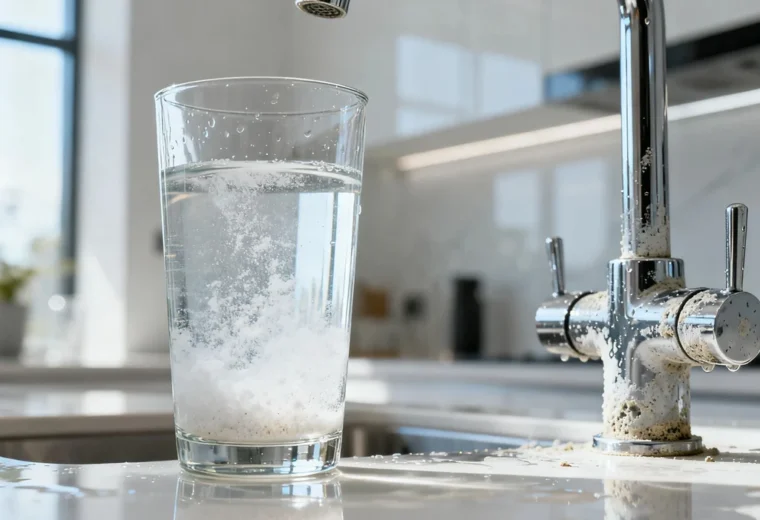
Hard water rarely announces itself with a dramatic warning. Instead, it leaves little reminders everywhere. A cloudy film on the shower door. Spots on freshly washed glasses. Soap that seems reluctant to lather. Maybe the water heater starts making strange noises after years of mineral buildup.
For some homeowners, these annoyances are occasional. For others, they become part of the daily routine.
The good news is that hard water is a problem with practical treatment options. A properly selected softening system can reduce hardness minerals before they travel through the home’s plumbing, helping make cleaning easier and potentially reducing scale-related issues.
But choosing a system shouldn’t be about buying the biggest unit on the shelf. Household size, water usage, hardness levels, flow rate, and maintenance requirements all matter.
Start by Understanding Your Water
Before choosing a softener, find out how hard your water actually is.
Hardness is generally associated with dissolved calcium and magnesium. These minerals aren’t necessarily visible in a glass, but they can create scale as water evaporates or is heated.
Testing gives you a useful starting point.
You also want to understand daily water consumption. A small household with moderate usage may have very different requirements from a large family that uses several bathrooms, laundry appliances, and other fixtures throughout the day.
Sizing equipment without considering actual demand is a bit like buying a refrigerator without measuring the kitchen first. It might work, but you’re taking an unnecessary gamble.
Why Some Homes Benefit From Twin Units
Continuous access to treated water can be important for busy households.
A single softener typically needs periodic regeneration to restore its treatment capacity. During that process, the system may not provide softened water in the same way it does during normal operation.
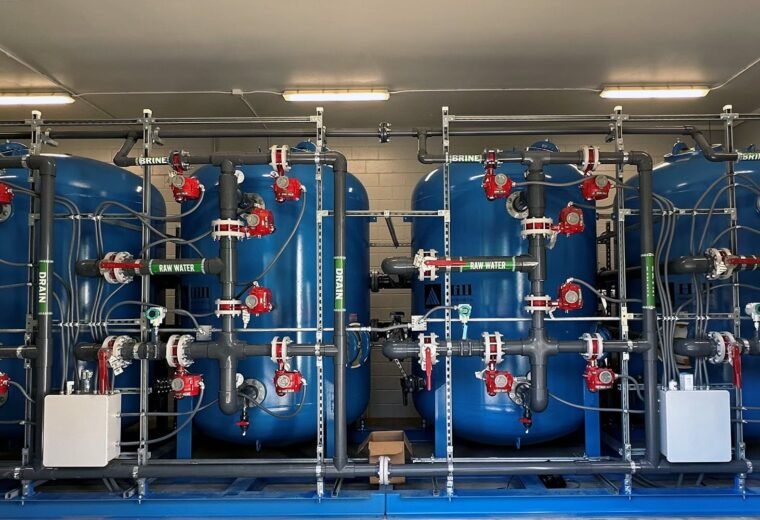
For homes with higher water demand, twin softeners can offer an interesting alternative. A dual-unit arrangement can allow one tank to remain in service while the other regenerates, depending on the system’s design and controls.
That can be especially useful when water is needed at unpredictable times.
Imagine a family where someone is doing laundry late at night, another person takes an early shower, and the dishwasher is running in between. Water demand doesn’t always follow a neat schedule.
A properly designed twin system can provide more continuity without requiring homeowners to think about regeneration cycles.
Capacity Matters More Than Appearance
A softener can look impressive and still be poorly suited to a particular home.
The important question is how much hardness the system can handle before regeneration is necessary. Capacity needs to be matched to water hardness and household consumption.
This is where high capacity resin media can make a difference in systems designed for demanding applications. Resin is the material responsible for exchanging hardness ions, and its capacity affects how much water can be treated before regeneration becomes necessary.
But more capacity isn’t automatically better.
An oversized system can cost more than necessary and may not operate as efficiently as a properly sized unit. Good system design is about matching capacity to actual conditions rather than choosing the largest specifications available.
What Happens During Softening?
Water softening is based on a process called ion exchange.
Inside a conventional softener, resin beads attract calcium and magnesium ions. In exchange, the system releases sodium or, in some applications, potassium ions.
The result is water with significantly reduced hardness.
It’s a relatively straightforward principle, but the equipment around the resin matters. Flow controls, valves, brine tanks, regeneration settings, and system programming all contribute to performance.
A high-quality softener isn’t just a tank filled with resin. It’s a complete system that needs to be correctly sized, installed, and maintained.
The Everyday Difference Can Be Surprisingly Noticeable
Once hardness is reduced, some changes are easy to spot.
Soap may lather more readily. Shower doors can be easier to clean. Glassware may come out with fewer mineral spots. Faucets can stay cleaner for longer.
For many homeowners, these practical improvements are the main reason for installing a softener.
There can also be benefits for water-using appliances. Mineral scale can accumulate in water heaters, dishwashers, washing machines, and plumbing fixtures. Reducing hardness can help limit that buildup.
It’s important not to overstate the benefits, though. A water softener isn’t a universal solution for every water-quality issue. It primarily addresses hardness.
If the water also contains sediment, iron, unpleasant odors, or other concerns, additional treatment may be necessary.
Softened Water Isn’t the Same as Filtered Water
This distinction gets overlooked quite often.
A softener reduces hardness minerals. It doesn’t automatically remove every substance someone might want to reduce from drinking water.
Softened water can still contain many of the other characteristics of the original supply.
If taste, chlorine, sediment, or specific dissolved contaminants are concerns, filtration or another treatment technology may be more appropriate.
Some households therefore use a combination of technologies. A whole-home softener can manage hardness while a point-of-use drinking-water system handles additional concerns at the kitchen tap.
The right combination depends on testing and personal priorities.
Don’t Ignore Regeneration and Salt Use
Traditional water softeners use salt or potassium chloride to regenerate the resin.
How frequently regeneration occurs depends on water hardness, household consumption, system capacity, and programming.
An efficient system should regenerate based on actual demand rather than following a wasteful fixed schedule whenever possible.
Homeowners should also understand how much salt the system typically consumes. A high salt requirement can become an ongoing cost, while poor programming can increase waste.
Ask about regeneration settings before purchasing. A professional should be able to explain how the system determines when regeneration is needed.
Maintenance Keeps the System Healthy
Like any household equipment, a softener needs attention.
The brine tank should be checked periodically. Salt levels need monitoring. Resin and control components may eventually require service. The system should also be inspected if water quality or performance changes.
If you notice that scale is returning despite having a softener, don’t simply add more salt and hope for the best.
There could be another explanation. The system might be incorrectly programmed, the resin could be exhausted, a valve could be malfunctioning, or the water chemistry may have changed.
A little troubleshooting can save a lot of unnecessary expense.
Think About Plumbing and Installation
Where the softener is installed matters.
There needs to be enough room for the equipment, proper drainage for regeneration, access to the controls, and an appropriate connection to the home’s water supply.
A poorly planned installation can make maintenance unnecessarily difficult.
It’s also worth considering what happens if the system needs to be bypassed. A convenient bypass arrangement allows homeowners or technicians to isolate the equipment without shutting down water to the entire house.
Small details like these don’t look impressive in a brochure, but they make everyday ownership much easier.
Choose the System Around Your Life
There isn’t one softener that makes sense for every household.
A compact system may be ideal for a smaller home. A higher-capacity setup could be appropriate for a larger family. Homes with heavy or unpredictable water demand may benefit from a twin configuration.
The key is to start with the water and the household, not the product.
Test the hardness. Estimate water usage. Consider peak demand. Ask about regeneration, maintenance, installation, and long-term operating costs.
Then choose equipment that fits those realities.
Hard water may never be glamorous, but dealing with it doesn’t have to be complicated. With the right system, thoughtful sizing, and regular maintenance, many of those everyday scale and cleaning frustrations can become a thing of the past.
And perhaps that’s the best reason to soften water in the first place. You aren’t buying technology for technology’s sake. You’re simply making the water work a little better for the home, the plumbing, and the people living there.