Most homeowners notice the signs long before they understand the cause.
The shower door never quite looks clean anymore. Faucets collect a chalky white residue no matter how often they’re wiped down. Coffee makers wear out suspiciously fast. And somewhere along the way, the dishwasher starts leaving spots on glasses that feel impossible to remove.
At first, it all seems unrelated. Just random little household annoyances.
But often, the common thread running through all of it is the water itself.
Hard water problems tend to build quietly over time. They don’t usually arrive with dramatic leaks or flooding. Instead, they settle into daily life in smaller ways — slowly affecting appliances, plumbing, cleaning routines, and even comfort around the house.
And honestly, many people live with these issues for years before realizing what’s really happening.
Why Hard Water Leaves Such a Mess Behind
Water naturally picks up minerals as it moves through soil and underground rock formations. In many regions, those minerals become concentrated enough to create what’s commonly known as hard water.
The main culprits are usually magnesium and calcium, both naturally occurring minerals that aren’t necessarily dangerous to drink but can become incredibly frustrating inside a home.
You see it first around fixtures.
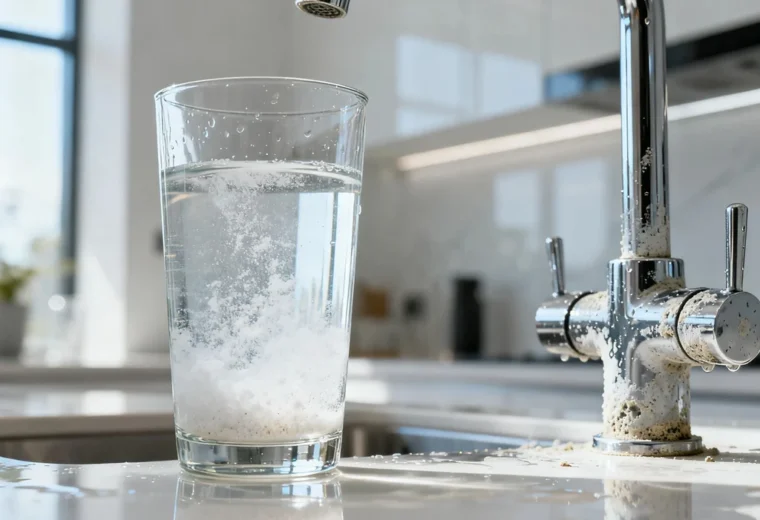
Tiny white spots appear on faucets. Showerheads begin clogging. The kettle develops cloudy residue along the bottom. It seems cosmetic initially, but the effects go deeper than appearance alone.
Those minerals don’t just sit on surfaces — they collect inside pipes, appliances, and heating systems too.
And once buildup starts forming internally, efficiency slowly begins to decline.
The Problem Most Homeowners Don’t Notice Early Enough
One of the more frustrating things about hard water is how gradually it develops.
Nobody wakes up one morning with a completely ruined plumbing system. Instead, small changes happen little by little until the damage becomes expensive enough to demand attention.
That’s where scale buildup becomes a real issue.
Scale forms when dissolved minerals separate from water and stick to surfaces over time. Water heaters are especially vulnerable because heat speeds up the process dramatically. As scale thickens inside equipment, appliances have to work harder just to function normally.
Energy bills can quietly rise.
Water pressure may decrease.
Appliance lifespan often shortens.
And since most of this happens out of sight, homeowners rarely realize what’s happening until performance noticeably drops.
I remember helping a friend troubleshoot why her water heater suddenly seemed “old” despite being less than five years installed. The technician eventually flushed out an incredible amount of mineral scaling from inside the tank. She was stunned because nothing looked wrong from the outside.
That’s the tricky part about hard water damage — it hides well.
Why Cleaning Feels Harder Than It Should
If you’ve ever scrubbed a sink only to watch white residue reappear days later, you already understand how exhausting mineral-heavy water can become.
Soap reacts differently in hard water. Instead of rinsing away cleanly, it often leaves behind film or residue on surfaces, skin, and fabrics. That’s why some homeowners feel like their towels are stiff or their hair never fully feels clean after a shower.
The issue gets even more frustrating in kitchens and bathrooms where moisture constantly evaporates and leaves minerals behind.
Over time, mineral buildup begins collecting around drains, inside coffee makers, on shower doors, and throughout plumbing fixtures. Some homeowners start replacing products unnecessarily — different soaps, stronger cleaners, expensive detergents — when the actual problem sits in the water itself.
And honestly, there’s only so much scrubbing a person can tolerate before it becomes genuinely irritating.
Hard Water Doesn’t Just Affect Plumbing
People often think of hard water strictly as a maintenance issue, but its effects spread much further through everyday life.
Laundry may fade faster because detergent doesn’t dissolve properly. Dishes come out spotted. Skin can feel dry or itchy after bathing. Even cooking changes slightly when mineral-heavy water alters flavors in coffee, tea, or soup.
It sounds minor discussing each issue individually, but together they create a constant low-level frustration throughout the home.
That’s partly why more homeowners are paying closer attention to water quality now than they did years ago.
They’re realizing water influences comfort in subtle but meaningful ways.
Why Water Testing Matters Before Buying Anything
One of the biggest mistakes people make is jumping directly into expensive treatment systems without understanding the actual issue first.
Not all hard water problems are equally severe. Some homes only need targeted filtration or softening adjustments, while others may require more comprehensive solutions depending on local mineral levels and plumbing conditions.
Testing gives homeowners clarity instead of guesswork.
Because honestly, the internet tends to throw every possible solution at people all at once. One article recommends reverse osmosis. Another swears by vinegar cleaning hacks. A neighbor insists everyone needs a giant softener system immediately.
Meanwhile, the right answer depends entirely on the specific water conditions inside the home.
Small Changes in Water Can Improve Daily Life More Than Expected
When homeowners finally address hard water issues properly, the improvements are usually noticeable surprisingly quickly.
Shower doors stay cleaner longer.
Soap lathers better.
Appliances run more efficiently.
Laundry feels softer.
Coffee tastes smoother.
None of these changes sound life-changing on paper, maybe. But in everyday life, they genuinely improve how a home feels and functions.
And perhaps that’s what makes water quality so important despite how rarely people discuss it openly.
Water runs quietly through nearly every daily routine. Cooking dinner. Taking showers. Washing dishes. Filling the dog’s bowl. Making coffee before work.
When everything works properly, nobody thinks about it.
But when hard water begins leaving signs behind — the stains, the residue, the declining appliance performance — it’s usually worth paying attention before those little inconveniences grow into much bigger repairs later on.